воскресенье, 16 февраля 2014 г.

The Loch Ness Monster

 I want to share with earth-shattering information. I discovered for myself one unbelievable fact. I got to know that Loch Ness Monster or "Nessie" as she's known locally had existed in the Loch Ness Lake.
Loch Ness is a large, deep, freshwater loch in the Scottish Highlands and is one of the most visited locations in Scotland. In fact it is the most famous lake in the world, loch being the Scottish word for lake or fiord. Loch Ness is a substantial body of water about 24 miles long by one mile wide and at its deepest point it goes down nearly 1,000 ft. There are about 40 small rivers, streams, burns and waterways running into the loch. Loch Ness lies at the northeast end of the Great Glen in the Highlands of Scotland and occupies a large part of the Great Glen fault. The Great Glen is a geological fault running across the entire width of the Highlands of Scotland. It runs southwest from Inverness right down to Fort William and contains three freshwater lochs - Loch Ness, Loch Oich and Loch Lochy. Loch Ness in the North of Scotland near Inverness is the largest freshwater lake in Great Britain. But it's not its size that makes it so famous, it's its very special inhabitant - the Loch Ness Monster - or 'Nessie' as we affectionately call her.
Loch Ness is connected to the Moray Firth via the Caledonian Canal and the River Ness in Inverness. At the eastern end of the loch is the village of Dores, at the other end is the settlement of Fort Augustus. The village of Dores has a wide crescent shaped beach which is a popular venue for walkers. From the beach there is a good walk through Torr Woods. Enjoy a drink at the Dores Inn.
There have been unconfirmed reports of a Loch Ness Monster since the 15th century, affectionately known as
'Nessie'. Enthusiasts trace the first sighting of the Loch Ness monster back to St Columba in the 6th century. His early biographer, St Adamnan, tells how he used the sign of the cross to repel a monster in the river Ness. Since then there have been numerous sightings which have been seriously reported and there have been many intensive scientific investigations. The Loch Ness Exhibition Centre in Drumnadrochit takes visitors through 500 million years of Loch Ness history using a highly effective mix of lasers, digital projection and special effects. It charts the history of the monster by exploring Scotland's geological past, its folklore and the various research projects carried out on the loch.
There are some more information about Loch Ness Monster:http://www.visitbritain.com/en/Loch-Ness-Ness.php
Also I have found video about 'Nessie',follow this link:http://www.youtube.com/watch?v=72Jcy9tuFas
When I was looking for some information about Loch Ness Monster, I had found Nicky's blog. He wrote abot 'Nessie' interesting informations and explained its history in detail.For more information tick here: http://locknessmonsters.blogspot.ru/
And here you can watch the trailer of the film about Loch Ness Monster which name is "Water horse".I hope that you like it.http://www.imdb.com/video/screenplay/vi1929117977

Welcome to the National Parks

Britain's breathing spaces

There are 15 members of the National Parks family, beautiful areas of mountains, meadows, moorlands, woods and wetlands.
They are areas of protected countryside that everyone can visit, and where people live, work and shape the landscape.
And each one has an organisation that looks after the landscape and wildlife and helps people enjoy and learn about the area.

To know more information click here
I made ​​a presentation on this topic. I hope you like it. I really dream to travel and maybe someday I'll visit these amazing places. Maybe when you see this presentation you'll want to go there too. Your Zhanna.The presentation about national parks

The Iron Lady

      What do you think about strong and powerful women like Margaret Thatcher? In the future I want to be like her. That is the reason why I have decided to choose this theme. I find her an exemplar. The whole world admires her and it is not for nothing. She  was a good mother, a magnificent politician and just beautiful woman.

Early Life

         Politician and former British prime minister Margaret Thatcher was born as Margaret Hilda Roberts on October 13, 1925, in Grantham, England. Nicknamed the "Iron Lady," Thatcher served as the prime minister of England from 1979 to 1990. The daughter of a local businessman, she was educated at a local grammar school, Grantham Girls' High School. Her family operated a grocery store and they all lived in an apartment above the store. In her early years, Thatcher was introduced to conservative politics by her father, who was a member of the town's council.
         A good student, Thatcher was accepted to Oxford University, where she studied chemistry at Somerville College. One of her instructors was the Dorothy Hodgkin, a Nobel Prize-winning scientist. Politically active in her youth, Thatcher served as president of the Conservative Association at the university. She earned a degree in chemistry in 1947, and went on to work as a research chemist in Colchester. Later, she worked as a research chemist in Dartford.

Early Foray into Politics

         Two years after graduating from college, Thatcher made her first bid for public office. She ran as the conservative candidate for a Dartford parliamentary seat in the 1950 elections. Thatcher knew from the start that it would be nearly impossible to win the position away from the liberal Labour Party. Still she earned the respect of her political party peers with her speeches. Defeated, Thatcher remained undaunted, trying again the following year, but once more her efforts were unsuccessful. Two months after her loss, she married Denis Thatcher.
       In 1952, Thatcher put politics aside for a time to study law. She and her husband welcomed twins Carol and Mark the next year. After completing her training, Thatcher qualified as a barrister, a type of lawyer, in 1953. But she didn't stay away from the political arena for too long. Thatcher won a seat in the House of Commons in 1959, representing Finchley.Clearly a woman on the rise, Thatcher was appointed parliamentary under secretary for pensions and national insurance in 1961. When the Labour Party assumed control of the government, she became a member of what is called the Shadow Cabinet, a group of political leaders who would hold Cabinet-level posts if their party was in power. 

Britain's First Female Premier

         When Conservatives returned to office in June 1970, Thatcher was appointed secretary of state for education and science, and dubbed "Thatcher, milk snatcher," after her abolition of the universal free school milk scheme. She found her position frustrating, not because of all the bad press around her actions, but because she had difficulty getting Prime Minister Edward Heath to listen to her ideas.Seemingly disenchanted on the future of women in politics, Thatcher was quoted as saying, "I don't think there will be a woman prime minister in my lifetime," during a 1973 television appearance.
          Thatcher soon proved herself wrong. While the Conservative Party lost power in 1974, Thatcher became a dominant force in her political party. She was elected leader of the Conservative Party in 1975, beating out Heath for the position. With this victory, Thatcher became the first woman to serve as the opposition leader in the House of Commons. England was in a time of economic and political turmoil, with the government nearly bankrupt, employment on the rise and conflicts with labor unions. This instability helped return Conservatives to power in 1979. As party leader, Thatcher made history in May 1979, when she was appointed Britain's first female prime minister.

Life After Politics

Not long after leaving office, Thatcher was appointed to the House of Lords, as Baroness Thatcher of Kesteven, in 1992. She wrote about her experiences as a world leader and a pioneering woman in the field of politics in two books: The Downing Street Years (1993) and The Path to Power (1995). In 2002, she published the bookStatecraft, in which she offered her views on international politics.
Around this time, Thatcher suffered a series of small strokes. She then suffered a great personal loss in 2003, when her husband of more than 50 years, Denis, died. The following year, Thatcher had to say goodbye to an old friend and ally, Ronald Reagan. In fragile health, Thatcher gave a eulogy at his funeral via video link, praising Reagan as a man who "sought to mend America's wounded spirit, to restore the strength of the free world, and to free the slaves of communism."
In 2005, Thatcher celebrated her 80th birthday. A huge event was held in her honor and was attended by Queen Elizabeth II, Tony Blair and nearly 600 other friends, family members and former colleagues. Two years later, a sculpture of the strong conservative leader was unveiled in the House of Commons.

Final Years and Legacy

        Margaret Thatcher's health made headlines in 2010, when she missed a celebration at 10 Downing Street, held in honor of her 85th birthday by David Cameron. Later, in November 2010, Thatcher spent two weeks in the hospital for a condition that was later revealed to cause painful muscle inflammation. In 2011, she sat out such a number of major events, including the wedding of Prince William in April, and the unveiling of the Ronald Reagan sculpture in London in July. Additionally, in July 2011, Thatcher's office in the House of Lords was permanently closed. The closure has been seen by some to mark the end of her public life.
         Battling memory problems in her later years due to her strokes, Thatcher retreated from the spotlight, living in near seclusion at her home in London's Belgravia neighborhood.Margaret Thatcher died on April 8, 2013, at the age of 87. She was survived by her two children, daughter Carol and son Sir Mark. Thatcher's policies and actions continue to be debated by detractors and supporters alike, illustrating the indelible impression that she has left on Britain and nations worldwide. 
 The information was taken from: Margaret Thatcher

,

суббота, 15 февраля 2014 г.

Scottish Attractions – What To See And Do In Scotland


Edinburgh Castle

Scotland has always stood apart among the UK thanks to a special color, history, architecture and nature. Of course, the attraction of Scotland is incalculable. Scotland's main wealth is its nature, numerous islands, beautiful sea, hum, fields and forests.
I want to tell you about Blair drummed safari park,the Falkirk wheel,Glenmorangie distillery tour. If you want to read more Scottish Attractions you can click here

 Blair Drummond Safari Park 
The children won’t get bored, that’s for sure, when you consider the number of attractions that make up the whole adventure that is Blair Drummond Safari Park. It’s a fabulous day out for all the family, young and old alike. Start off by driving through the animal reserves, then when you  park you can take a walk through …
Read more about Blair Drummond Safari Park


The Falkirk Wheel
An engineering design wonder, The Falkirk Wheel is our #3 visitor attraction. This huge structure was built to connect the Union and Forth and Clyde Canals for east to west coast access for boats. The technical genius makes this a fascinating sight, and it’s a great day out for the whole family, adults and children alike.
Read more about The Falkirk Wheel


Glenmorangie Distillery Tour
Do you like your whisky? Whisky distilleries have always been popular visitor attractions in Scotland, and none more so than the famous Glenmorangie Distillery.
If you enjoy the Glenmorangie Distillery tour experience, then you’ll be drooling with delight when you are spoilt for choice in the shop. Photograph by Bern Altman.


Top attractions in Wales

You won’t want to miss these must-see attractions on your visit to Wales. I tell you about Millennium Stadium,Cardiff Castle,Snowdonia National Park. But if you want to know more click here.

Millennium Stadium 
A tour of the Millennium Stadium in Cardiff is a must for any sports fan. This is Wales’ national stadium, and the third largest stadium in Britain. It’s mainly used for rugby and football games, and is now one of the most impressive icons of modern Wales. 
Capacity - more than 74 500 viewers. At the stadium hold their national teams play Wales football and rugby. The most spacious indoor stadium in the world with a natural lawn.If you want read more click  here


Cardiff Castle 
Wales is known as the land of castles, so it should come as no surprise that you’ll find a castle in the middle of the capital city. Cardiff Castle is home to 2,000 years of history, from the arrival of the Romans, through to the Norman Conquest and the Victorian rule. Don’t miss the Interpretation Centre, where you can delve into the fascinating history of the castle, and enjoy panoramic views of the castle and its Norman Keep.
Cardiff Castle is a medieval castle and Victorian Gothic revival mansion located in the city centre of Cardiff, Wales.
The original motte and bailey castle was built in the late 11th century by Norman invaders on top of a 3rd-century Roman fort. The castle was commissioned by either William the Conqueror or by Robert Fitzhamon, and formed the heart of the medieval town of Cardiff and the Marcher Lordterritory of Glamorgan. In the 12th century the castle began to be rebuilt in stone, probably by Robert of Gloucester, with a shell keep and substantial defensive walls being erected. Further work was conducted by Richard de Clare in the second half of the 13th century. 
If you want read more click here


Snowdonia National Park
Experience the best of the Welsh countryside at Snowdonia National Park, the largest National Park in Wales. With 100 lakes, 37 miles of pristine coastline and beaches, moors and wetlands, and 90 mountain peaks - including Mount Snowdon, the tallest mountain in Wales – there’s plenty to do. Explore the landscape by foot, bike or horseback; discover the local events and attractions, or test your adventurous side with a day of white water rafting.

Snowdonia (Welsh: Eryri) is a region in north Wales and a national park of 823 square miles (2,130 km2) in area. It was the first to be designated of the threeNational Parks in Wales, in 1951.
The Park's entire coastline is a Special Area of Conservation, which runs from the Llŷn Peninsula down the mid-Wales coast, the latter containing valuable sand dune systems.
If you want read more click here

воскресенье, 9 февраля 2014 г.

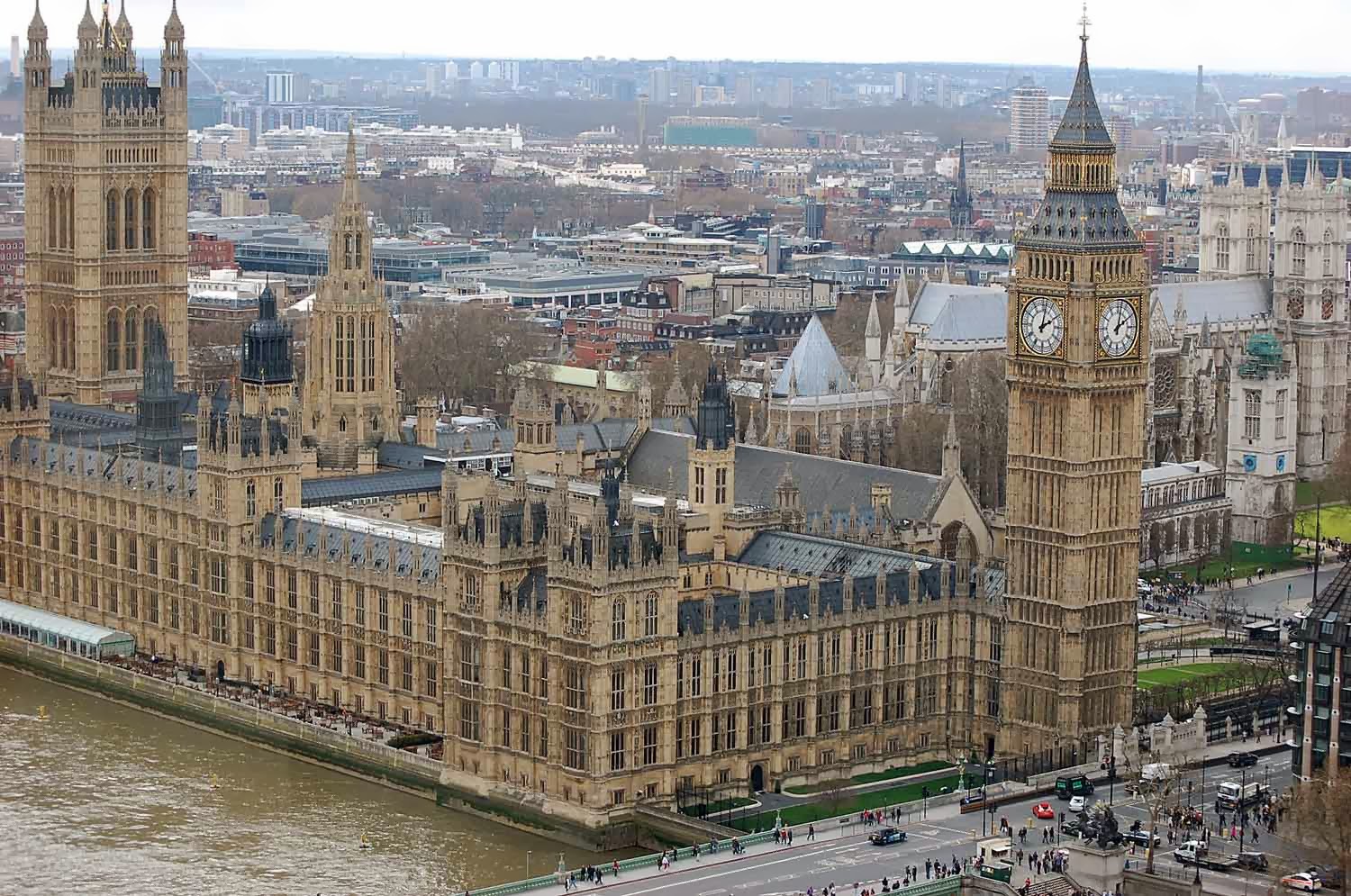
3D Tour of Westminster Parliament

The Palace of Westminster, more commonly known as the Houses of Parliament, is the seat of the bicameral Parliament of the United Kingdom, comprising the House of Commons and the House of Lords. It is located on the left bank of the River Thames in the borough of Westminster, London. The building, now considered one of the finest gothic structures in the world, has had many incarnations, thanks to a turbulent history which has included destruction by fire and bombing.http://www.parliament.uk/visiting/online-tours/virtualtours/westminster-hall-tours/westminster-hall/

To know more information click on the link bellow
I think there is no man on earth who does not like to travel. Go to different places, to learn more about the people and their culture, also see sightseeing of a differant city. Visit the ancient buildings and a dip in the ancient times. I found a very interesting 3D tour of The Palace of Westminster.I hope you like it as much as I.


Population of the Uk

What do you know about the population of the UK? I have found interesting statistics about the population of the UK for 2008 year. I find this information very interesting because I think that household of the UK is similar with household of our country. Especially I am surprised by the fact that the average age at first marriage rose between 1996 and 2006. For men it was 29.3 in 1996 and 31.8 in 2006. For women it rose from 27.2 to 29.7. For men who had been married and divorced at least once before, the average age at remarriage rose from 41.7 in 1996 to 46.0 in 2006. For women who had been married and divorced at least once before the equivalent ages were 38.6 and 43.1. This trend towards delayed marriage is not new. In 1966 the average age at first marriage was 24.9 for men and 22.5 for women. At remarriage it was 39.3 for men and 36.2 for women.
  • There were 25.0 million households in Great Britain in Q2 2008, a 4 per cent increase on Q2 2001 when there were 23.9 million.
  • In Q2 2008 around 10 million dependent children in the UK lived with two parents, the most common family arrangement. Of these the majority (8.3 million) lived with married parents. 
  • In Q2 2008, 1.8 million men in the UK aged 20 to 34 lived with their parents, compared with 1.1 million women in the same age group. 
  • There were around 237,000 marriages in England and Wales in 2006, the lowest number recorded since 1895. 
  • The majority of people who married in the UK in 2006 did so for the first time: around 71 per cent of men and 72 per cent of women. 
  • In 2007 the average age for women giving birth in England and Wales was 29.3 years, compared with 28.3 years in 1997 and 26.6 years in 1971. 
,